


BOSNIA-ERZEGOVINA
The lands of Diocletian: between sacred and profane
3 days
Gaio Aurelio Valerio Diocle (later latanized to Diocletian) was born in 244 AD in Dalmatia to a family of humble status and died in the current city of Split in 313 AD. Since he had no access to high level education, Diocletian choose the military career in order to foster his social ascent. His history is worldwide known because of the terrible persecutions of Christians.
Day 1: Croatia / Split – Bosnia and Herzegovina / Medjugorje (km. 140)
Arrival in Split. Guided tour of the city, with its complex style variety that will lead the visitors among Roman ruins, Byzantine arches, Venetian gangways and African influences. The name of this gorgeous Dalmatian city derives from the word “palatinum”, since here was built the Diocletian’s Palace, whose main attraction is doubtless the historical part within the walls. In the 4th century Emperor Diocletian ordered the construction of a compound in preparation for his retirement, which took place in 305 AD after he renounced the throne in Rome. It is said that the building could house 2,000 people.
After a typical lunch based on Adriatic fish, departure to Medjugorje. Hotel accommodation, dinner and overnight.
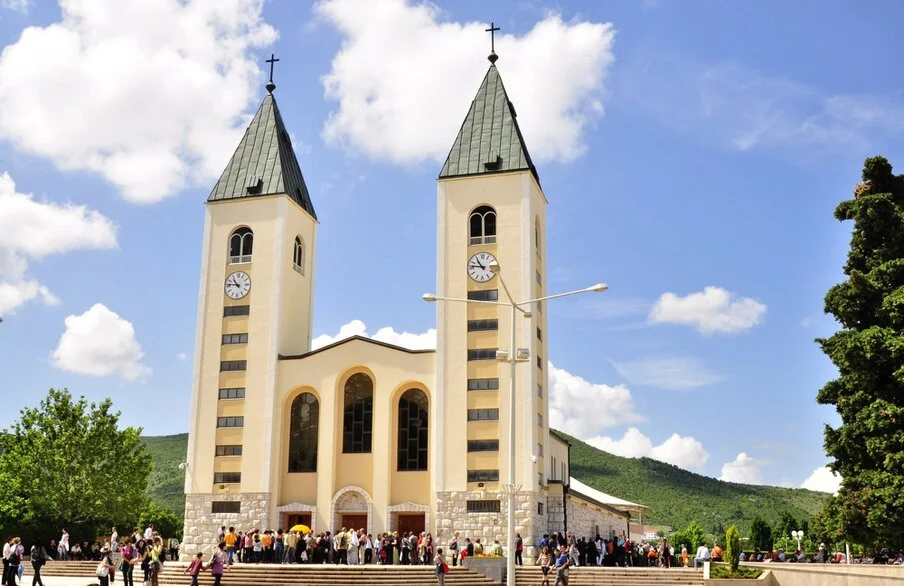
Curiosity: the toponym Međugorje can be divided into the words “među” and “gorje”, which means “between mountains”: Podbrdo and Križevac. It’s a place of worship placed in Bosnia and Herzegovina with a Croatian ethnic group of Catholic religion, which was preserved during more than 400 years of the Ottoman rule (1400-1800).
Day 2: Bosnia and Herzegovina / Medjugorje
After breakfast guided tour to the discovery of the story of the seers and of the popularity that Medjugorje gained as a place of prayer.
On June 24, 1981, in a remote rural village, Our Lady allegedly appeared to a group of children in order to give the world a message of peace and conversion reachable by means of prayer and fasting. Our Lady was smiling and was dressed with a shining bluish-grey dress and a white veil covering her black hairs; her eyes were full of caring and love and she had a crown of 12 stars on her head. Her voice was as sweet “as music”. She had a few words with the guys, she prayed with them and she promised to come back. At the end of the visit, lunch and time at leisure to join the religious services. Dinner and overnight.
Day 3: Bosnia and Herzegovina / Medjugorje - Mostar – Croatia / Split (Km. 190)
Breakfast and departure to the charming city of Mostar, whose symbol is the Old Bridge (Stari Most) built in 1565 under the Ottoman rule. The Bridge was destroyed during the 1990s by Croat forces during the Croat-Bosniak war among Croats, Bosniaks and muslim Bosniaks to get control of the city. In 2000 the Bridge was rebuilt almost identically and it was listed by UNESCO as a World Heritage Site, together with the Area of the Old City. Nowadays Mostar and its Bridge are among the most visited places in Bosnia and Herzegovina[G1] and they undoubtedly represent a symbol of peace.
Curiosity: the town of Mostar takes the name from the bridge and from the towers upon the two shores, the so-called “bridge guardians” or “Mostari”.
After lunch, time at leisure to discover the many craft shops in the old town. Return to the port of Split for the boarding.