


SICILY
Exclusive Sicily: 10 Days of Art and Flavors
10 days
There are trips you take, and then there are trips that stay with you.
The ones that, years later, you can still feel: the scent of jasmine in the morning in Palermo, the warmth of lava stone beneath your hands in Catania, the unmistakable flavour of a pistachio granita eaten at dawn by the sea in Taormina.
Sicily is exactly that kind of place. And this 10-day itinerary,
designed and curated by Podium Tour Operator, is crafted to take you to
the heart of that experience, with the certainty that every moment is
already in its place.
Podium doesn’t simply organize the tour; it lets you experience Sicily in depth, a conscious immersion in one of the richest and most enchanting regions of the Mediterranean.
Day 1 — Palermo: The Heart of the Island
The journey begins where Sicily’s story unfolds: Palermo.
The
island’s capital is a city that cannot be fully explained, it must be
experienced firsthand. Three millennia of history coexist here in a
compact, dense space, where a Norman arch stands beside an Arab dome,
and a Baroque cathedral incorporates a medieval tower as if it were the
most natural thing in the world.
The first stop is Palermo Cathedral,
a masterpiece of architectural syncretism that has passed through the
hands of the Arabs, Normans, Angevins, and Spaniards, each leaving a
mark without erasing the previous one. Its current structure features a
15th-century Catalan Gothic façade, 12th-century Arab-Norman apses, and a
neoclassical dome added in the 18th century.
In the afternoon, the Norman Palace and its hidden gem: the Palatine Chapel.
Built
by Roger II in 1130, this chapel is considered one of the most
extraordinary examples of medieval art in the world. The golden mosaics
covering the walls and vaults combine Christian iconography with the
Arab-Norman style in a unique way: the panels depicting Christ
Omnipotent, the saints, and biblical scenes seem to glow on their own,
as if the light were coming from within the wall. Looking up at the
wooden muqarnas ceiling (a decorative structure typical of Islamic
architecture) while standing in a Christian royal chapel is a
disorienting yet fascinating sensation.
The evening is dedicated to the historic Ballarò market, the oldest in Palermo, with a stroll among the stalls before sitting down to dinner.
Cuisine: it all begins with Sfincione Palermitano,
a soft, thick pizza topped with onion, tomato, anchovies, and
caciocavallo cheese, fragrant with oregano and richer than any other
dough you’ve ever tasted. Next come Sarde alla beccafico,
sardines stuffed with toasted breadcrumbs, raisins, pine nuts, and
parsley, rolled up and baked in the oven: a dish that still carries
within it the Arab influence of medieval Sicily, in a perfect balance
between sweet and savoury.
Day 2 — Monreale and Madonie Mountains: where the sky touches the stone
Just a few Km from Palermo, the Cathedral of Monreale
is one of those places that transforms your perception of what art can
achieve. Built by William II between 1172 and 1189, its interior is
covered with approximately 6,340 square meters of golden mosaics, making
it the largest surviving medieval mosaic cycle in the world. The
mosaics depict scenes from the Old and New Testaments with extraordinary
narrative precision.
In
the lunette above the entrance, Christ Pantocrator dominates the space:
nearly seven meters tall, his gaze follows anyone moving through the
nave.
The
adjacent cloister is equally memorable: 228 paired columns, each
decorated with mosaics and sculptures that frame a garden of rare
beauty.
In the afternoon, the Madonie,
the mountain range overlooking the Tyrrhenian Sea. The landscape
changes radically: from the Baroque splendour of the capital, we move on
to stone villages clinging to ridges, centuries-old oaks, and quiet
valleys. The day ends with a stroll along the paths of Castelbuono, with its medieval fortress and its ash-wood manna shops, unique in the world.
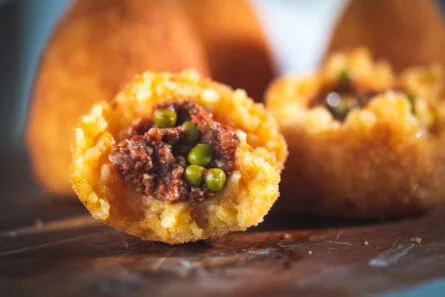
Cuisine: the arancine
(feminine form, in Palermo) set the scene for lunch. These are rice
balls that are crispy on the outside and soft on the inside, filled with
meat sauce or béchamel and peas. Pasta con le sarde (with
sardines): bucatini dressed in wild fennel, fresh sardines, raisins,
pine nuts and saffron. A dish that evokes the scent of the harbour and
oriental spices in a single mouthful.
Day 3 — Agrigento: Valley of the Temples and a dialogue with the Greeks
There are places in the world where you feel like a guest of time. The Valley of the Temples in Agrigento
is one of them. A UNESCO World Heritage Site since 1997, this
architectural complex contains the remains of one of the most important
settlements of ancient Greece outside Greece itself. The city of Akragas, founded in 580 BC, became one of the richest metropolises in the Mediterranean within a few centuries.
Temple of Concordia
is the best-preserved: built in the 5th century BC, it has retained its
Doric structure thanks to its conversion into a Christian church in the
6th century AD. Strolling amongst its columns at dawn (an experience
that Podium offers through early access before the site opens to
the public) is an experience that is hard to put into words. The
limestone takes on an almost orange hue in the first light, and the view
of the entire plateau with the temples lined up against the backdrop of
the sea is one of the most beautiful in Sicily.
Just a stone’s throw away lies Scala dei Turchi,
a cliff of white marl sculpted by erosion into natural terraces,
overlooking the cobalt-blue Mediterranean; it offers one of the island’s
most photographed views. The early afternoon light transforms it into
something almost unreal.
Cuisine: Agrigento is synonymous with caponata,
aubergines, celery, capers, olives, and tomatoes in a sweet-and-sour
sauce, one of the masterpieces of Sicilian cuisine, where the Arab
influence on sweet-and-sour cooking blends with produce from the
Mediterranean garden. And then there is couscous alla Trapani,
which here in the western provinces is made with fresh fish: sea bream,
mullet, scorpion fish, and fragrant fish stock; a legacy of Arab rule
that has found its finest expression in Sicily.
Day 4 — Selinunte and Marsala: ruins and wine
Selinunte
is the largest archaeological site in Europe: almost 270 hectares of
acropolis, temples, necropolises and dwellings stretching across a
hillside that slopes down towards the sea. Founded by the Greeks in the
7th century BC, it was destroyed by the Carthaginians in 409 BC in one
of the bloodiest battles of antiquity. Its fallen columns, some of which
still lie horizontally exactly where they collapsed twenty-five
centuries ago, convey a rare sensation: that of time not as an
abstraction, but as a physical weight.
In the afternoon arrival in Marsala, a town that takes its name from the Arabic exclamation ‘Marsa Allah’ (Port of God). Here, Podium
invites you to visit the Florio cellars, where century-old oak barrels
hold the fortified wine that Marsala has given to the world. The guided
tasting, paired with pecorino cheese and local olives, is a moment of
pure sensory delight.
Cuisine: Tonno in agrodolce
(sweet-and-sour tuna) prepared with red onion, vinegar and brown sugar,
is one of the great dishes of Trapani cuisine. It is served with
Marsala bread, dense and fragrant with sesame, and the meal concludes
with freshly made cannoli alla siciliana: a crisp shell of fried pastry filled with fresh sheep’s milk ricotta, chopped pistachios, and candied orange peel.
Day 5 — Trapani and the Egadi Islands: the Mediterranean in its purest form
The city of Trapani
is built on a strip of land jutting out towards Tunisia, and its
architecture reflects its identity as a port: compact, practical,
beautiful. The salt pans of Trapani and Marsala, with their white
windmills, mounds of pink salt and flamingos flying over the basins,
form one of the most unusual and photogenic landscapes in western
Sicily.
This day includes a trip by private motorboat to the Egadi Islands: Favignana, Levanzo and Marettimo. Podium
has arranged an exclusive boat for the group, with snorkelling in the
coves of Cala Rossa on Favignana and a visit to the Grotte del Genovese
on Levanzo, home to some of the most significant rock art in the
Mediterranean, dating back to the Upper Palaeolithic period.
Cuisine: a lunch of fresh fish by the harbour in Favignana. Swordfish rolls with breadcrumbs, capers, olives and a hint of lemon, and busiate,
a traditional Trapani pasta shape, hand-rolled around a metal rod,
served with Trapani-style pesto: tomato, toasted almonds, garlic, basil
and Nocellara del Belice olive oil.
Day 6 — Palermo by night and journey eastwards
A free morning in Palermo, for those who wish to wander through the narrow streets of Vucciria
once more or explore the Antonio Salinas Regional Archaeological
Museum, home to one of Italy’s most important collections of Greek and
Punic art, including the famous metopes from Temple C at Selinunte.
In the afternoon, transfer to the east coast. Upon arrival in Taormina, many travellers realise why this town is considered one of the most beautiful in the Mediterranean.
A travel trivia:
Taormina has never needed to promote itself; from Goethe to D.H.
Lawrence, from Oscar Wilde to Truman Capote, generations of European
artists and intellectuals have flocked here of their own accord, drawn
by that unique blend of natural beauty, Greek art, and southern light.
Day 7 — Taormina and the Ancient Theatre: the stage of the world
The Ancient Theatre of Taormina
is the most photographed spot in Sicily and, without a doubt, one of
the most beautiful in the world. Built by the Greeks in the 3rd century
BC and later expanded by the Romans, it overlooks a dual panorama that
is unrivalled: on one side the sparkling Ionian Sea, on the other the
silhouette of Mount Etna, often shrouded in clouds or a wisp of white
smoke. For the Greeks, who built theatres on hillsides to have the sky
and the landscape as a backdrop, this was the highest vantage point they
could imagine.
In
the morning: a guided tour when there aren’t many people around yet. It
is in these quiet moments that you really understand what it meant to
create art in the ancient world.
In
the afternoon, a stroll along Corso Umberto, Taormina’s medieval main
street, past pottery shops, boutique perfumeries and cafés serving the
best granita of the trip.
Cuisine: Pasta alla Norma
originated in Catania but is eaten with reverence all along the Ionian
coast. Maccheroni or rigatoni with tomato sauce, fried aubergines,
grated salted ricotta and fresh basil.
In the evening, dinner with a view of Mount Etna and a tasting of Etna DOC wine,
one of Italy’s most interesting reds: the Nerello Mascalese, grown at
high altitude on volcanic soil, produces wines of unexpected complexity.
Day 8 — Mount Etna and Catania: fire, lava and black Baroque
Mount Etna
is Europe’s highest active volcano: 3,357 metres above sea level and
has been constantly active for 500,000 years. It is not merely a natural
feature; it is the mythological heart of Sicily, the forge of
Hephaestus, the monster who hurls rocks at Ulysses. Climbing up to the
Silvestri Craters at 1,900 metres, walking along lava flows that look as
though they have only just cooled, is an experience that puts any sense
of control over the world into healthy perspective.
Podium has always organised the climb with certified volcanological guides, including a stop at the high-altitude vineyards of Benanti or Passopisciaro (wineries that produce extraordinary local wines on black lava soil).
Catania
welcomes the group in the afternoon. The city, rebuilt entirely after
the earthquake of 1693, is a Baroque masterpiece in black lava stone:
this is why it is known as the ‘black city’ or the ‘Capital of Dark
Baroque’. Piazza del Duomo, with its Elephant Fountain, a symbol of
Catania since 1239, is one of the most dramatic urban spaces in Italy.
Cuisine: Catania is the capital of Sicilian street food. At the Pescheria market, you can enjoy hot crespelle, deep-fried dough fritters filled with anchovies or ricotta and stigghiole, lamb offal rolled around spring onions and cooked over hot coals. A special mention also goes to the Catania-style arancino, which, unlike its Palermo counterpart, is cone-shaped and has a masculine name.
Day 9 — Syracuse and Noto: Baroque architecture that brings tears to your eyes
For many, Syracuse
is the highlight of the trip. Founded by Corinthian settlers in 734 BC,
it was for two centuries the most powerful city in the western
Mediterranean, more powerful than Carthage, more powerful than Rome.
Archimedes was born there. Plato stayed there. Aeschylus staged the
world premieres of his tragedies there.
The
Neapolis Archaeological Park comprises the Greek Theatre, carved
directly out of the rock in the 5th century BC and capable of seating
15,000 spectators, and the Ear of Dionysius, a 23 metre-high limestone
cave shaped like an ear, which amplifies every sound in an extraordinary
way: legend has it that Dionysius I used to lock prisoners inside to
hear their secrets.
The afternoon belongs to Noto,
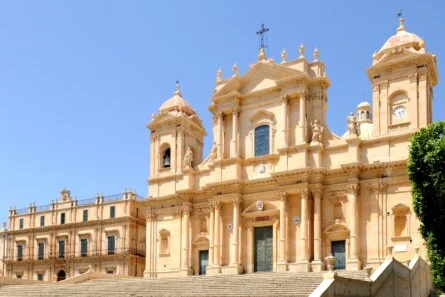
the quintessential Baroque town. Entirely rebuilt after the 1693
earthquake according to a new, rational layout, Noto is an urban work of
art: every palace, every church, every staircase boasts the same golden
proportions as the local yellow limestone, which glows almost
incandescently at sunset. The Cathedral of San Nicolò, Via Nicolaci with
its balconies adorned with monsters, tritons and mermaids, Palazzo
Ducezio with its open loggia… every corner is a picture-perfect scene.
Cuisine: Lunch in Syracuse featuring pasta al nero di seppia (pasta with squid ink), one of the region’s most distinctive and memorable specialities. Sicilian cassata
for dessert: the most opulent cake in Italian cuisine, made with sponge
cake, sweet ricotta, almond paste, candied fruit and white icing.
Day 10 — Ragusa Ibla and our farewell to the island
The final day with Podium Tour Operator is dedicated to Ragusa Ibla,
the old town of Ragusa, which winds down a limestone ridge amongst
olive and carob trees as if time had stood still in the 18th century.
Part of the UNESCO circuit of Baroque towns in the Val di Noto, it is
perhaps the most unspoilt and least commercialised of them all.
The
Church of San Giorgio, with its concave façade and the staircase that
fans out across the square, is a masterpiece by the architect Rosario
Gagliardi, the man who, following the earthquake of 1693, almost
single-handedly redesigned the whole of eastern Sicily. Strolling
through the narrow streets of Ibla in the morning, when the shops are
slowly opening and the elderly are bringing their chairs out, is one of
those moments that cannot be planned but which Podium has learnt to
cherish.
Cuisine: our final lunch is a celebration; a long table laden with seasonal caponata, freshly fried arancini, fresh ricotta with orange blossom honey, and mustaccioli, spiced sweets dating back to medieval times, made with cooked wine and scented with cinnamon.
To toast the occasion, a glass of Cerasuolo di Vittoria DOCG, Sicily’s only wine with a controlled and guaranteed designation of origin.
Podium Tour Operator: choose the exclusivity of our Tailor-Made trips.
Organising
a trip to Sicily isn’t difficult. Organising it well, striking the
right balance between cultural depth and authenticity, is another matter
entirely.
Sicily
isn’t something you can just wing. It needs to be planned with care,
savoured at a leisurely pace, and cherished with gratitude.
Podium is here to guide you through it all.
Would you like to plan a tailor-made tour for your group (minimum 10 people) in Sicily?
Ask for Podium Tour Operator. Available only at the best travel agencies!